
No dreams here. No angels. A city gate, ten elders, a legal question, and a sandal.
It might be the least dramatic scene in the whole book.
Read it slowly anyway. Everything is about to be decided.
Ruth 4:1-12
Tap a tool, then tap words. Highlight what gets your attention · underline what God is doing or saying · circle a repeated or unfamiliar word.
Read it aloud, then give everyone two minutes to mark it in silence.
1
2
3
4
5
6
7
8
9
10
11
12
1
2
3
4
5
6
7
8
9
10
11
12
NET Scripture quoted by permission. Quotations designated (NET) are from the NET Bible® copyright ©1996, 2019 by Biblical Studies Press, L.L.C. netbible.com
What stood out?
Go around the room. Each person reads one thing they marked. If you know why it stood out, say so. If you don’t, “it just stood out” is a complete answer. Nobody explains, nobody corrects.
Compare after you’ve marked
- Boaz's role as kinsman-redeemer and how it transforms Ruth's and Naomi's lives.
- The way God works in the background, fostering growth and change, nurturing lives even when the results are not immediately visible.
- The assurance that God is nurturing growth in our lives, often in quiet, unseen ways.
Your markings are saved on this device and will be here when you come back.
Growth you cannot see
Ruth 4 opens in the least dramatic place possible: the city gate, elders assembled, a legal negotiation, a sandal exchanged. No miracle, no voice from heaven. Legal business. And yet this is the scene where everything is settled: Boaz redeems the land, takes Ruth as his wife, and preserves Naomi's family line. God does some of His most important work through process, patience, and quiet legal proceedings at the gate.
Jesus says the Kingdom of God is like seed a farmer scatters, which grows “night and day, and the seed springs up and grows, though he doesn't know how” (Mark 4:26-27). Growth does not need to be visible to be real. “He who began a good work in you will complete it” (Philippians 1:6). That is a promise about the quiet stretches, when nothing seems to be happening and God is completing things underground.
Do not despise the unglamorous means God is using in your life: the routine, the process, the slow obedience. The elders at the gate blessed a transaction that became the doorway to King David. Quiet does not mean absent.
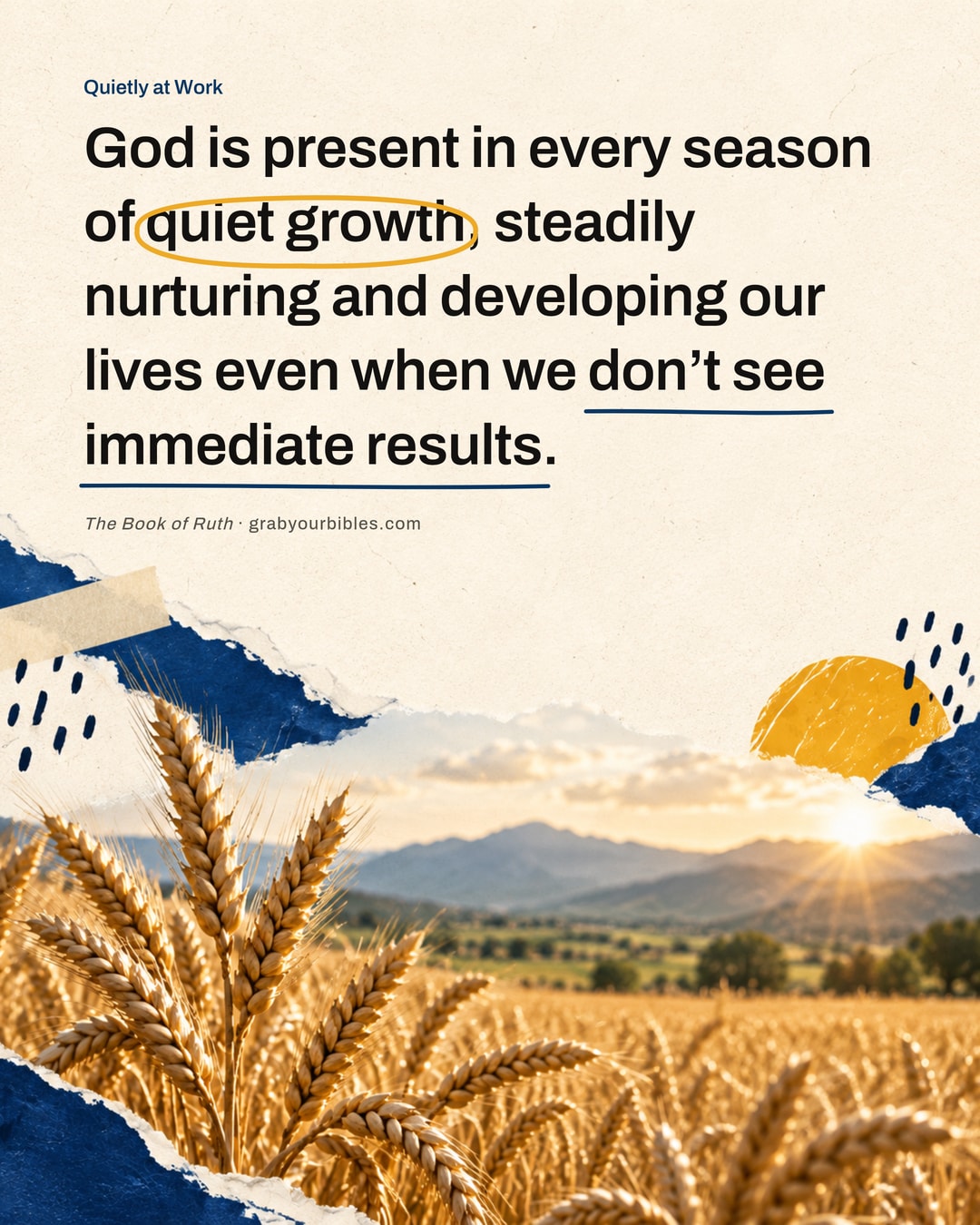
Read this one out loud.
The same truth across Scripture
The prophet asks the question this session answers: who dares despise the day of small things? The Lord's work often starts smaller than anyone respects.
One plants, another waters, and the growing itself belongs to God. The visible work was never the whole work.
Discussion questions
- Everything in Ruth 4 is settled through an ordinary legal process. Why do we struggle to see God in the unglamorous?
- Where might God be growing something quietly in your life right now?
- Looking back, what has God grown in you during a season when it felt like nothing was happening?
- How can you cooperate with slow growth this week instead of rushing it?
Write it out.
Write freely. Your words are saved in this browser only, on this device, as you type. Nothing you write is sent to us.
Email opens your mail app. We do not store your notes.
Let’s pray together
Read Ruth 4:1-12 aloud again, slowly.
Pray together: “Come, Holy Spirit. Open our eyes to Your presence in this season.”
In pairs or small clusters, pray for one another:
- Where do you need to trust in God's quiet growth in your life?
- How can we pray for God to help you recognize and trust in His steady work?
Leave space for silence, listening, and Spirit-led prayer. If someone senses a word, a Scripture, or a picture for another, offer it gently and pray into it.
Let’s pray
Breakthrough is when God's Kingdom breaks into your reality: His healing where there is pain, His freedom where there is bondage, His presence where there is loneliness. Jesus is King; His freedom, peace and purpose are available now. Pray from that Kingdom, not toward it.
Be still for a moment. Open your hands and simply pray: “Come, Holy Spirit.”
Ask: “What do You want me to know right now? What were You highlighting when I marked the passage?” Stay open to a word, a Scripture, a picture, or a prompting.
Pray boldly into what He shows you. Ask for His Kingdom in the specific places this session touched:
- Where does nothing seem to be happening? Name it.
- Ask Him to help you recognize and trust His steady, quiet work there.
You can pray more than once. Stay present, and trust that God is at work. Take your time; there is no hurry.
Choose one. Say it out loud so someone else hears it.
Next time you gather, share what you practiced and how God used it, not for pressure but for encouragement.
The reminder downloads as a calendar event. Open it and it lands on your calendar for tomorrow morning.
Back into the passage
You have the teaching now. Go back with it, on your own this week or right now:
- Go back to what you marked. Repetition often matters. What word, phrase, or idea repeats, and what might the author be drawing your attention to?
- What does this passage show you about God: His character, His timing, His way of working?
- What surprised you, or ran against what you expected? Sit with that. Ask the Spirit why it caught you.
- Is there a promise to trust, a command to follow, or an example to learn from?
- Pay attention to what got your attention. What might the Spirit be highlighting for your life right now?
Done.
God is present in every season of quiet growth, steadily nurturing and developing our lives even when we don't see immediate results.