
Galatians 5:22-23 | John 15:9-11 | Luke 10:21
Tap a tool, then tap words. Highlight what gets your attention · underline what God is doing or saying · circle a repeated or unfamiliar word.
Read it aloud, then give everyone two minutes to mark it in silence.
Notice where Jesus’ own joy comes from and what He says He wants it to do in you.
Galatians 5:22-23
22
23
John 15:9-11
9
10
11
Luke 10:21
21
Galatians 5:22-23
22
23
John 15:9-11
9
10
11
Luke 10:21
21
Read Galatians 5:22-23; John 15:9-11; Luke 10:21 in the New Living Translation
Galatians 5:22-23
John 15:9-11
Luke 10:21
NET Scripture quoted by permission. Quotations designated (NET) are from the NET Bible® copyright ©1996, 2019 by Biblical Studies Press, L.L.C. netbible.com
What stood out?
Go around the room. Each person reads one thing they marked. If you know why it stood out, say so. If you don’t, “it just stood out” is a complete answer. Nobody explains, nobody corrects.
Your markings are saved on this device and will be here when you come back.
Joy
“I have told you this so that my joy may be in you and that your joy may be complete.” (John 15:11)
“At that time Jesus, full of joy through the Holy Spirit...” (Luke 10:21)
Joy (chara) isn’t a reaction to good circumstances; it’s the settled gladness of being loved by God. In Scripture, joy isn’t the opposite of sorrow, it’s the presence of hope in sorrow.
Jesus’ joy was rooted in His relationship with the Father, not the comfort of His surroundings. Even on the eve of His suffering, He could say, “My joy may be in you.” Joy flows from union: from abiding in God’s love and trusting His goodness in every season.
The Spirit brings us joy not by removing pain, but by anchoring us in a deeper story, one where resurrection always follows loss, and love always has the final word.
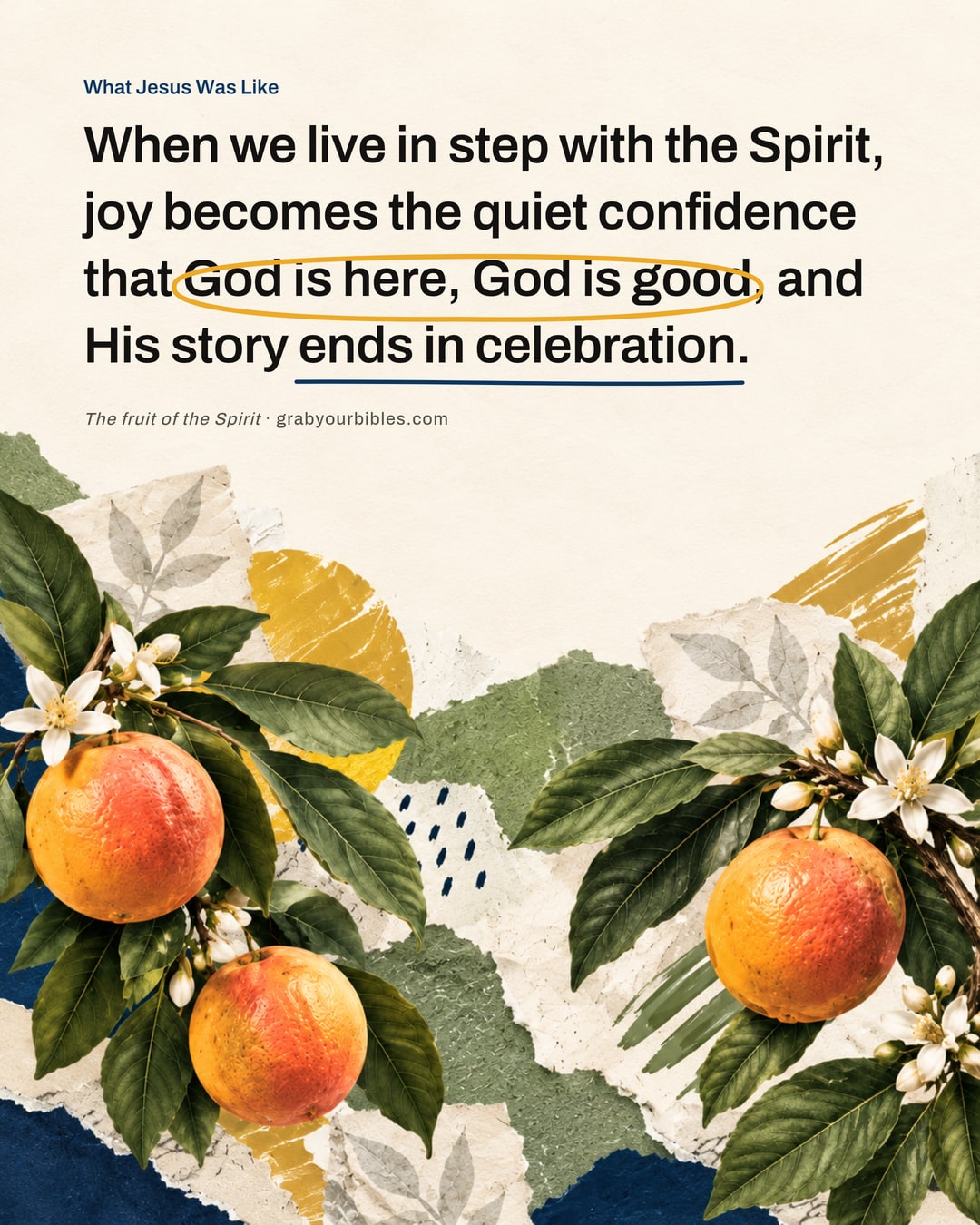
When we live in step with the Spirit, joy becomes the quiet confidence that God is here, God is good, and His story ends in celebration.
Read this one out loud.
Choose one. Say it out loud so someone else hears it.
Next time you gather, share what you practiced and how God used it, not for pressure but for encouragement.
The reminder downloads as a calendar event. Open it and it lands on your calendar for tomorrow morning.
Back into the passage
You have the teaching now. Go back with it, on your own this week or right now:
For this session
Deep gladness that flows from abiding in God’s love, not from circumstances. Chara shares its root with charis (“grace”). Joy is grace recognized: delight in God’s presence that remains even through grief. It is the quiet confidence that resurrection always follows loss.
“I have told you this so that my joy may be in you and that your joy may be complete.”
“Rejoice in the Lord always.”
Jesus endured the cross “for the joy set before him.”
Joy is love celebrating, the soundtrack of a heart that knows it’s already home with God.
Done.
When we live in step with the Spirit, joy becomes the quiet confidence that God is here, God is good, and His story ends in celebration.