
He does not tell tired people to try harder.
He offers them something to carry, which is a strange thing to offer somebody who is already carrying too much.
Read what He says about the weight.
Matthew 11:28-30 | Mark 2:27-28
Tap a tool, then tap words. Highlight what gets your attention · underline what God is doing or saying · circle a repeated or unfamiliar word.
Read it aloud, then give everyone two minutes to mark it in silence.
Read the passages slowly. Notice who He is talking to, what He offers them, and what He says the Sabbath is for. What details stand out? What surprises you?
And one more, every session of this study: the house instruction already asks you to underline what God is doing. In this study, also circle what the people are doing.
Matthew 11:28-30
28
29
30
Mark 2:27-28
27
28
Matthew 11:28-30
28
29
30
Mark 2:27-28
27
28
NET Scripture quoted by permission. Quotations designated (NET) are from the NET Bible® copyright ©1996, 2019 by Biblical Studies Press, L.L.C. netbible.com
What stood out?
Go around the room. Each person reads one thing they marked. If you know why it stood out, say so. If you don’t, “it just stood out” is a complete answer. Nobody explains, nobody corrects.
Your markings are saved on this device and will be here when you come back.
Rest and identity
From the very beginning, God created a rhythm of rest. “By the seventh day God had finished the work he had been doing; so on the seventh day he rested” (Genesis 2:2). Later He commanded His people, “Remember the Sabbath” (Exodus 20:8). To “remember” isn’t just “don’t forget.” It means to keep it alive, to carry this rhythm forward into every part of life. Hebrews 4 tells us there is still a Sabbath-rest for God’s people, a foretaste of God’s Kingdom future breaking into our present.
Jesus made this even clearer: “The Sabbath was made to meet the needs of people, and not people to meet the requirements of the Sabbath.” (Mark 2:27-28, NLT)
Sabbath is a gift, not a burden, meant to remind us of who we are. But like any gift, it can be twisted into an idol of rules and legalism. Jesus restores it to its true purpose: life, freedom, and presence with God.
Jesus calls to the weary and burdened: “Come to me... and I will give you rest” (Matthew 11:28). Sabbath is not a heavy law to keep but a gift to receive. A gift of freedom from hurry, performance, and striving. Sabbath declares: My identity is not in what I achieve, but in Christ’s love for me.
Sabbath is a discipline we grow into. The four movements below follow the shape John Mark Comer gives in The Ruthless Elimination of Hurry, each rooted in Scripture:
Cease striving, assignments, emails, and proving yourself.
Embrace your limits; take a nap, breathe, let your body and soul recover.
Enjoy God’s gifts: food, friendships, laughter, nature. Joy is holy.
Remember God’s salvation; turn delight into gratitude and worship.
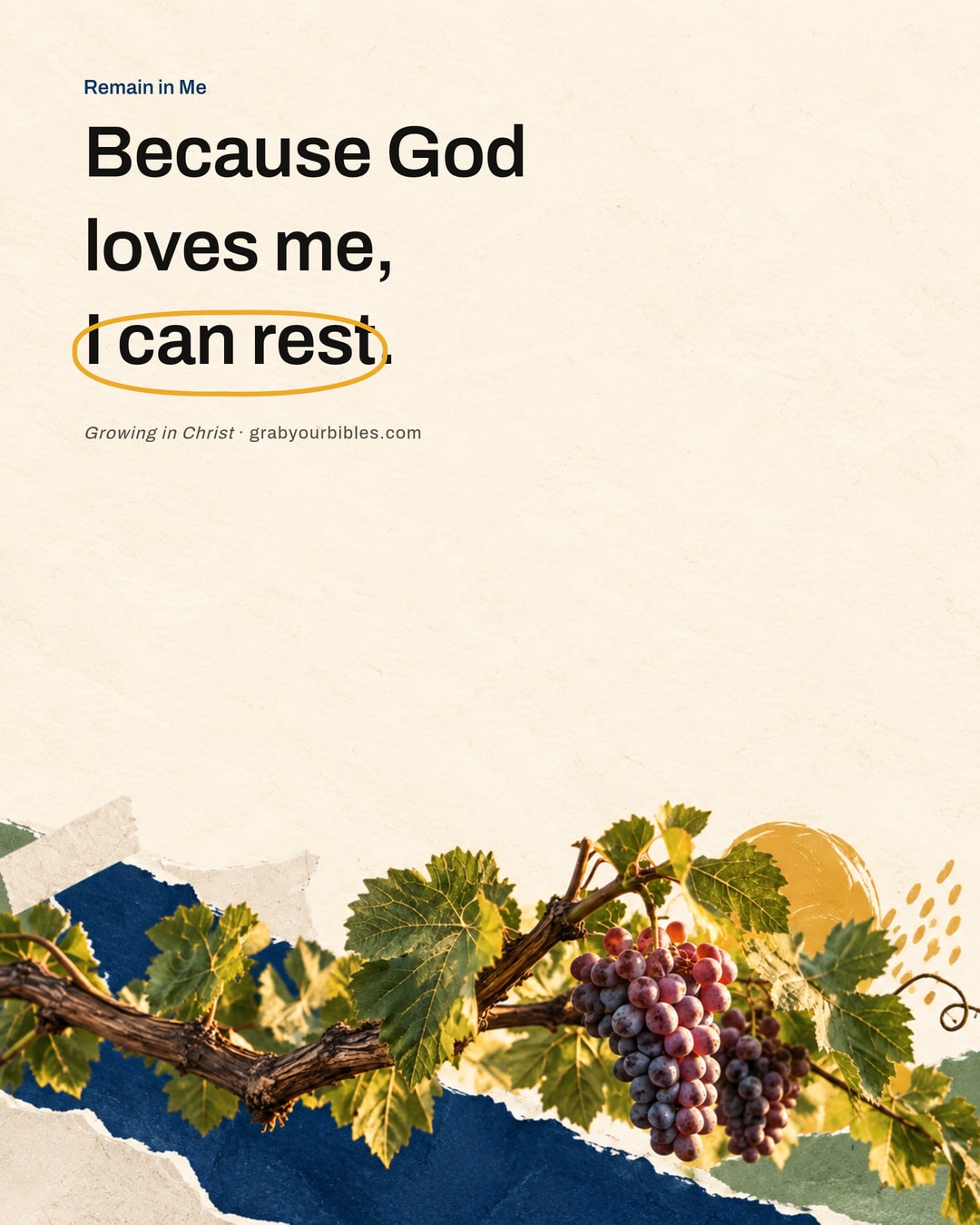
Read this one out loud.
Discussion questions
- What stands out to you in Jesus’ invitation in Matthew 11?
- In what ways do you feel defined by achievement rather than by God’s love?
- Which of the four Sabbath movements (Stop, Rest, Delight, Worship) feels most natural to you? Which feels hardest?
- How might practicing Sabbath begin to reshape your relationships, work, or sense of identity?
Write it out.
Write freely. Your words are saved in this browser only, on this device, as you type. Nothing you write is sent to us.
Email opens your mail app. We do not store your notes.
Let’s pray together
This is where we invite the Holy Spirit to make God’s future Kingdom a present reality.
Read Matthew 11:28-30 aloud again, slowly.
Pray together: “Come, Holy Spirit. Teach us to live in Your rest.”
In pairs or small clusters, pray for one another: release burdens; speak identity (“You are loved. You don’t have to earn it.”); ask the Spirit to bring freedom from hurry and striving.
Leave space for silence, prophetic words, or pictures God may give.
Leave space for silence, listening, and Spirit-led prayer. If someone senses a word, a Scripture, or a picture for another, offer it gently and pray into it.
Let’s pray
Breakthrough is when God’s Kingdom breaks into your reality: His healing where there is pain, His freedom where there is bondage, His presence where there is loneliness. Jesus is King; His freedom, peace and purpose are available now. Pray from that Kingdom, not toward it.
Be still for a moment. Open your hands and simply pray: “Come, Holy Spirit.”
Read Matthew 11:28-30 aloud again, slowly. Pray: “Come, Holy Spirit. Teach me to live in Your rest.” Name one burden and hand it over. Then say it to yourself the way you would say it to a friend: I am loved. I don’t have to earn it. Leave some silence, and write down anything the Spirit gives you.
You can pray more than once. Stay present, and trust that God is at work. Take your time; there is no hurry.
Choose one. Say it out loud so someone else hears it.
Next time you gather, share what you practiced and how God used it, not for pressure but for encouragement.
The reminder downloads as a calendar event. Open it and it lands on your calendar for tomorrow morning.
Back into the passage
You have the teaching now. Go back with it, on your own this week or right now:
For this session
The Shepherd restores my soul.
God rests after creation.
Remember the Sabbath.
Remember God’s salvation.
Sabbath was made for man.
A Sabbath-rest remains.
Be still and know that I am God.
Done.
Because God loves me, I can rest.