
The book of Ruth opens with a famine and three deaths in five verses.
No explanation. No comfort speech. Just a grieving woman who believes she has come home empty.
Read what she says when she finally gets back. She doesn't pretend.
Ruth 1:1-22
Tap a tool, then tap words. Highlight what gets your attention · underline what God is doing or saying · circle a repeated or unfamiliar word.
Read it aloud, then give everyone two minutes to mark it in silence.
1
2
3
4
5
6
7
8
9
10
11
12
13
14
15
16
17
18
19
20
21
22
1
2
3
4
5
6
7
8
9
10
11
12
13
14
15
16
17
18
19
20
21
22
NET Scripture quoted by permission. Quotations designated (NET) are from the NET Bible® copyright ©1996, 2019 by Biblical Studies Press, L.L.C. netbible.com
What stood out?
Go around the room. Each person reads one thing they marked. If you know why it stood out, say so. If you don’t, “it just stood out” is a complete answer. Nobody explains, nobody corrects.
Compare after you’ve marked
- Naomi's grief and despair after losing her husband and sons.
- Contrast Orpah's decision to return to her people with Ruth's loyalty to Naomi.
- Ruth's commitment to Naomi despite her own loss, and God's quiet but constant presence, leading Naomi back to her community.
Your markings are saved on this device and will be here when you come back.
When everything is lost
The book opens with famine and three deaths. Naomi loses her husband and both sons in a foreign land, and when she comes home she asks to be renamed: “Call me Mara, for the Almighty has dealt very bitterly with me.” Scripture does not scold her grief. It records it, honestly. The Bible makes room for seasons that feel empty. But watch the same chapter closely: the journey home begins because “Yahweh had visited His people in giving them bread.” Even in the bitterest verse of the book, God is already moving the story toward hope.
Ruth's answer to loss is covenant loyalty: “Your people shall be my people, and your God my God.” In this chapter, one of the ways God’s presence becomes visible is through a person who stays. Paul calls God “the Father of mercies and God of all comfort, who comforts us in all our affliction” (2 Corinthians 1:3-4), and one of the ways He does it is through someone who refuses to leave. God is able to work even what we cannot understand toward His good purposes, and in Ruth, that work begins to become visible through someone walking the road beside Naomi.
In seasons of loss, presence beats explanation. Naomi never gets an explanation; she gets Ruth. If you are grieving, let honesty be part of your faith. Naomi's was. If you are near someone who is grieving, be Ruth: stay, walk, glean, show up.
Read this one out loud.
The same truth across Scripture
The psalmist says plainly what Ruth 1 shows quietly: the Lord stays close to the brokenhearted, even when He says nothing.
Another griever who talks to God with full honesty, bitterness and all, and finds mercy waiting in the morning.
Discussion questions
- Naomi is completely honest about her bitterness. How comfortable are you bringing that kind of honesty to God?
- Where in Ruth 1 do you see God at work, even though He never speaks?
- Reflect on a season of loss in your life. Who was “Ruth” for you: the person who stayed?
- Who around you is in a season of loss right now, and what would it look like to stay with them?
Write it out.
Write freely. Your words are saved in this browser only, on this device, as you type. Nothing you write is sent to us.
Email opens your mail app. We do not store your notes.
Let’s pray together
Read Ruth 1:1-22 aloud again, slowly.
Pray together: “Come, Holy Spirit. Open our eyes to Your presence in this season.”
In pairs or small clusters, pray for one another:
- Where do you need God's comfort in your life?
- How can we pray for you to experience His guidance through loss and lead you back to hope?
Leave space for silence, listening, and Spirit-led prayer. If someone senses a word, a Scripture, or a picture for another, offer it gently and pray into it.
Let’s pray
Breakthrough is when God's Kingdom breaks into your reality: His healing where there is pain, His freedom where there is bondage, His presence where there is loneliness. Jesus is King; His freedom, peace and purpose are available now. Pray from that Kingdom, not toward it.
Be still for a moment. Open your hands and simply pray: “Come, Holy Spirit.”
Ask: “What do You want me to know right now? What were You highlighting when I marked the passage?” Stay open to a word, a Scripture, a picture, or a prompting.
Pray boldly into what He shows you. Ask for His Kingdom in the specific places this session touched:
- Where do you need God's comfort right now? Tell Him honestly, the way Naomi did.
- Ask Him to guide you through the loss and lead you back to hope.
You can pray more than once. Stay present, and trust that God is at work. Take your time; there is no hurry.
Choose one. Say it out loud so someone else hears it.
Next time you gather, share what you practiced and how God used it, not for pressure but for encouragement.
The reminder downloads as a calendar event. Open it and it lands on your calendar for tomorrow morning.
Back into the passage
You have the teaching now. Go back with it, on your own this week or right now:
- Go back to what you marked. Repetition often matters. What word, phrase, or idea repeats, and what might the author be drawing your attention to?
- What does this passage show you about God: His character, His timing, His way of working?
- What surprised you, or ran against what you expected? Sit with that. Ask the Spirit why it caught you.
- Is there a promise to trust, a command to follow, or an example to learn from?
- Pay attention to what got your attention. What might the Spirit be highlighting for your life right now?
Done.
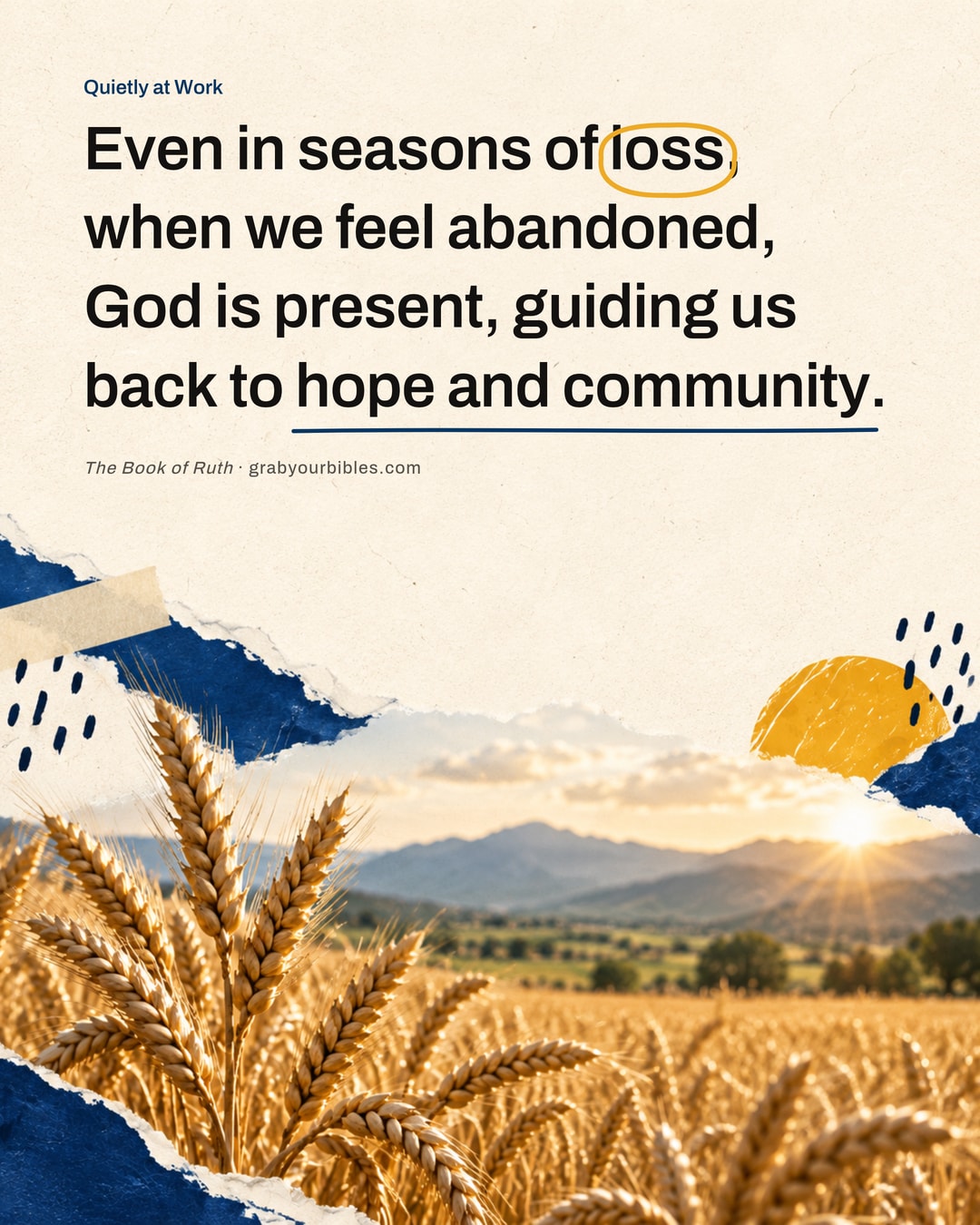
Even in seasons of loss, when we feel abandoned, God is present, guiding us back to hope and community.