
Paul uses two words for God in one line, and one of them is what a small child would say.
Read who he says is being led, and what he says we did not receive.
Then find the word we cry out, and notice who he says is testifying alongside us.
Romans 8:14-17
Tap a tool, then tap words. Highlight what gets your attention · underline what God is doing or saying · circle a repeated or unfamiliar word.
Read it aloud, then give everyone two minutes to mark it in silence.
Read the passage slowly. Notice who Paul says are children of God, what he says we did not receive, the word we cry out, and what he says we share in. What details stand out? What surprises you?
Mark it:
- Underline what God is doing or saying.
- Circle a word that repeats, or one you don’t understand.
- Highlight whatever gets your attention, even if you can’t say why.
NET Scripture quoted by permission. Quotations designated (NET) are from the NET Bible® copyright ©1996, 2019 by Biblical Studies Press, L.L.C. netbible.com
What stood out?
Go around the room. Each person reads one thing they marked. If you know why it stood out, say so. If you don’t, “it just stood out” is a complete answer. Nobody explains, nobody corrects.
Your markings are saved on this device and will be here when you come back.
Living from the Father’s Love
Jesus lived in constant communion with the Father. Every miracle, word, and act of compassion flowed from that relationship. He didn’t act independently; He only did what He saw the Father doing. That same intimacy is now ours through the Spirit.
When we receive the Father’s love, we begin to live from a place of belonging rather than striving. The Spirit helps us cry out, “Abba, Father.” Abba is an Aramaic word for Father. It is familial and intimate, not merely a formal title, and Paul uses it to describe the remarkable access believers receive by the Spirit. We stop performing for God’s approval and start living as loved sons and daughters.
From that place of love, compassion begins to flow. We start to see people through the Father’s eyes. Ministry becomes less about pressure and more about presence. The more we receive, the more we have to give.
“Abba” is a relational cry, not a distant title.
The Spirit helps us experience God as both Lord and loving Father.
Our identity as beloved children shapes how we live, serve, and respond.
Compassion isn’t an optional add-on; it’s the natural overflow of a heart rooted in love.
We don’t minister to earn love; we minister from it.
Read this one out loud.
Discussion questions
- When you hear “Abba, Father,” what emotions or images come to mind?
- Describe a moment when you felt the love of God in a personal way. What made it real?
- What makes God’s love difficult for you to receive?
- How might seeing others through the Father’s heart change your posture toward them?
- Where do you sense the Spirit inviting you to grow in compassion, toward yourself or someone else?
Write it out.
Write freely. Your words are saved in this browser only, on this device, as you type. Nothing you write is sent to us.
Email opens your mail app. We do not store your notes.
Let’s pray together
Ask for a fresh experience of the Father’s love.
Invite healing where there has been distance or wounding.
Pray for soft hearts, renewed trust, and Spirit-led compassion.
Closing prayer: Holy Spirit, thank You for revealing the Father’s heart. Help us live as sons and daughters, deeply loved and fully known. Let compassion flow through us into a world in need. Amen.
- “Father, how do You see me?”
- “What lies am I believing that keep me from Your love?”
- “Who needs Your compassion through me today?”
Leave space for silence, listening, and Spirit-led prayer. If someone senses a word, a Scripture, or a picture for another, offer it gently and pray into it.
Let’s pray
Breakthrough is when God’s Kingdom breaks into your reality: His healing where there is pain, His freedom where there is bondage, His presence where there is loneliness. Jesus is King; His freedom, peace and purpose are available now. Pray from that Kingdom, not toward it.
Be still for a moment. Open your hands and simply pray: “Come, Holy Spirit.”
Ask the Spirit the three questions and write down what comes, starting with the first one: Father, how do You see me? Then pray for a fresh experience of the Father’s love, and for healing wherever there has been distance or wounding. Pray His closing prayer as your own.
You can pray more than once. Stay present, and trust that God is at work. Take your time; there is no hurry.
Choose one. Say it out loud so someone else hears it.
Next time you gather, share what you practiced and how God used it, not for pressure but for encouragement.
The reminder downloads as a calendar event. Open it and it lands on your calendar for tomorrow morning.
Done.
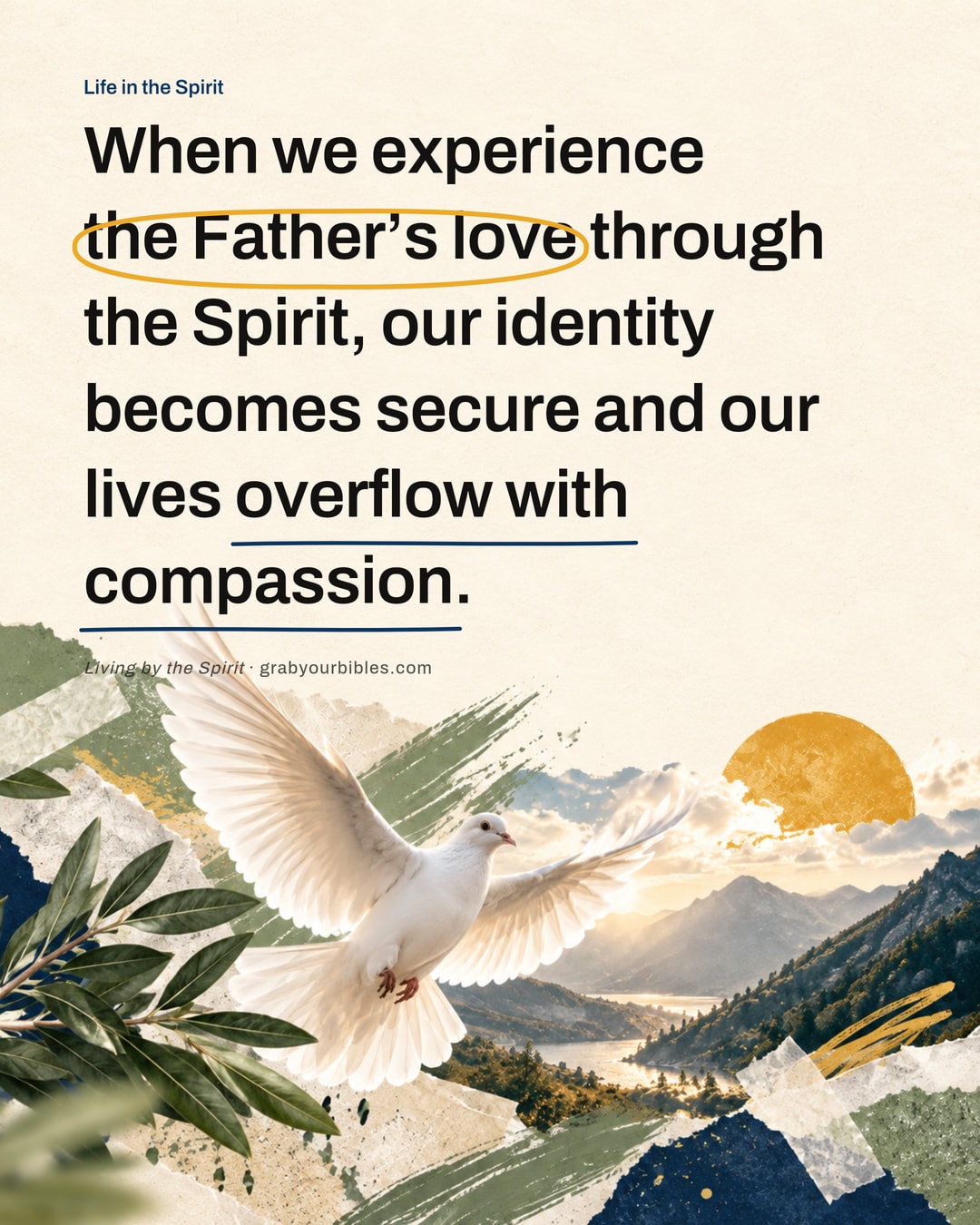
When we experience the Father’s love through the Spirit, our identity becomes secure and our lives overflow with compassion.